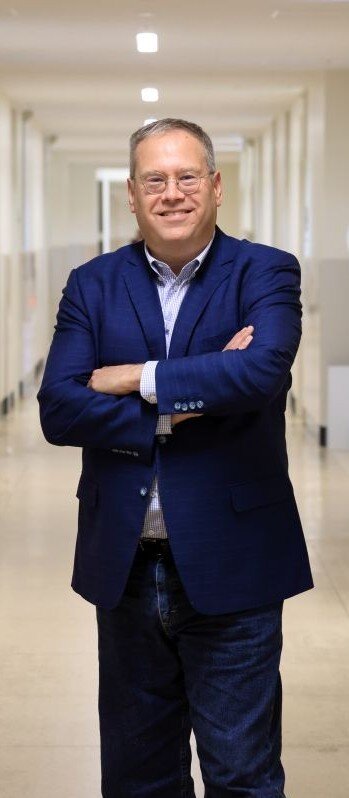
Managing Partner, The Asia Group
Trustee, Japan ICU Foundation (JICUF)
Former Deputy Chief of Mission, U.S. Embassy in Tokyo (30-year diplomatic career)
Studied at ICU as a non-degree student for one year, starting September 1981.
A 30-Year Career in Diplomacy: How ICU Shaped My Approach to Dialogue
Discovering International Relations and the Early Spark of a Diplomatic Career
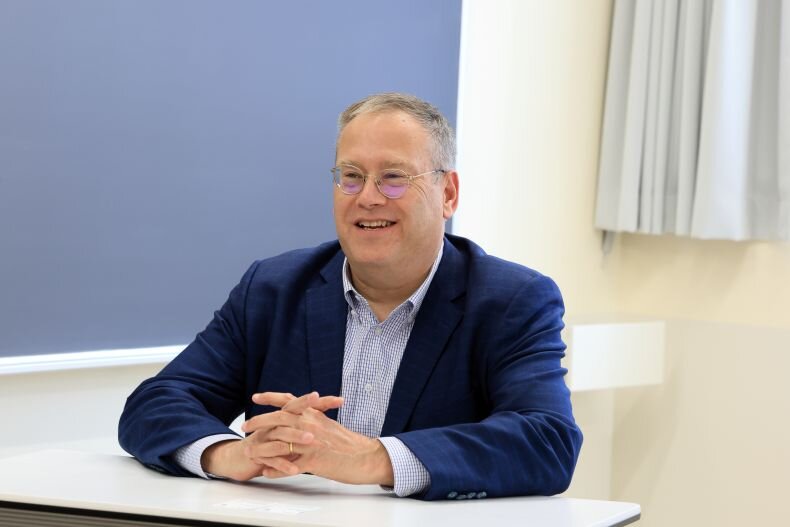
I first arrived in Japan—and at ICU—in the fall of 1981. My father was on a research leave and teaching at ICU at the time, and through that connection, I decided to spend the year between high school and college studying Japanese as a non-degree student. I didn't earn academic credit for the classes, but I threw myself into the work each day, studying not only language but also the history and political landscape of Japan.
The experience of engaging with ICU students, studying alongside them, and gaining a visceral understanding of different cultures was invaluable. More than forty years later, I remain close to many of the friends I made during that time, as well as friends I met later through the Japan-America Student Conference. ICU was far more than a place to learn languages—it exposed me to diverse perspectives and helped lay the foundation for how I would later approach the world as a diplomat. In many ways, it was the starting point of my diplomatic journey.
I also joined the soccer club, where I regularly ended up muddy and occasionally injured on the dirt field. For an 18-year-old, life in a foreign country was full of surprises. I once tried to enter a Shibuya disco wearing sandals instead of shoes and was promptly turned away—a memory that now makes me laugh. Every community has its norms, and unless you take the time to understand and respect them, you can't be welcomed in. Diplomacy is no different. If you insist on your own way without learning the history, culture, and unspoken rules of your counterpart, meaningful dialogue becomes impossible.
Another memory I treasure is participating in the Thai Work Camp organized by the Religious Center during spring break. Students from Thailand, Japan, and the United States—each with different cultures and customs—worked side-by-side to build a school in a remote mountain village. The experience of joining forces across language barriers to accomplish a common goal has stayed with me ever since.
Listening—More Than Speaking—Is at the Heart of Dialogue
In the 2025 Winter term, I have returned to ICU—this time as a part-time lecturer, teaching U.S. economic policy. In my classes, I emphasized not only theory but also real-world policy practice. I want students to understand how the United States implements policy—what processes it uses, and how a complex institution like a nation-state actually functions. My hope is that they develop the ability to read between the lines and discern the intentions behind government actions.
A liberal arts education is not simply about reading books or attending lectures. Its essence lies in meeting people who think differently and engaging in deep dialogue. In an age where everything can be looked up online, the true value of university lies in being part of an environment where authentic conversation can happen. ICU's greatest strength is that it provides exactly such a setting. Students learn to articulate their views, listen attentively, and then question whether their own opinions hold up. Through active engagement, they generate new ideas and skills. That, I believe, is the true value of university learning.
I tell my students that "listening" matters more than speaking. Since my student days, listening has been the skill I value most. "Listening" also includes "asking questions," which requires courage. It takes confidence to say, "I don't understand," and seek clarification.
My diplomatic career has taken me to many countries, each with its own political systems and social dynamics. One of the greatest lessons the United States can learn from Japan is the culture of consensus-building. American society is intensely individualistic, valuing speaking out and asserting one's rights. Today, in U.S. politics, I see more people trying to overpower others with anger or volume, and fewer who truly listen. Japan, by contrast, still values patient consensus-building and harmony. While polarization is growing here as well, the commitment to listening remains strong. I wish more Americans would learn from Japan's thoughtful approach to consensus.
Have You Met Someone New This Month?
Throughout my 30-year diplomatic career working with Japan, China, North Korea, and other parts of East Asia, I learned that diplomacy is often misunderstood. People imagine it as giving speeches and persuading others--but that kind of work represents perhaps 10 percent of the job. The remaining 90 percent is understanding what the other side is thinking and what they want, then explaining that clearly and accurately to your own government.
Only when mutual understanding exists can negotiations truly begin. Simply asserting your own position won't move anyone. For example, the TPP negotiations took many years of balancing the interests of participating countries and searching for common ground. Even with tremendous effort, many negotiations stall. Perhaps succeeding one time out of four is a good outcome. Still, you never stop trying to understand the other side. For me, that persistence has its roots in what I learned at ICU.
To those considering ICU--and to current students--I encourage you to embrace as many diverse experiences as you can while you are young. Mistakes that might cost you your job later in life are forgiven when you're a student. Sharing an off-target opinion in class or proposing a bold hypothesis in a paper will not end your career. That is why ICU's environment, where you learn alongside peers from different countries and backgrounds and experience a wide range of values and cultures, is so special. Take advantage of it.
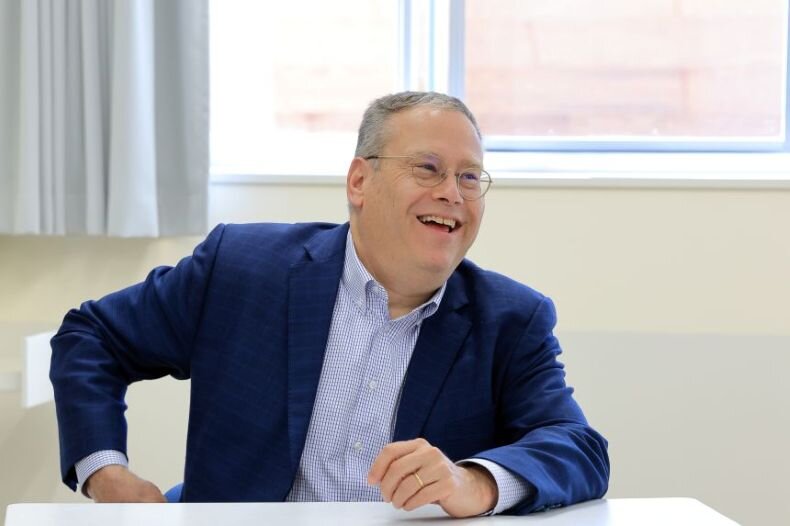
If you haven't had a meaningful conversation with someone new in the past month, that is a missed opportunity. Use your privileges as a student: seize chances, meet new people, travel, and challenge yourself boldly.
*This article has been edited and structured as of January 2026.
Profile
Kurt Tong
Managing Partner, The Asia Group
Trustee, Japan ICU Foundation (JICUF)
Former Deputy Chief of Mission, U.S. Embassy Tokyo
Studied at ICU as a non-degree student in 1981-82.
Earned B.A. at Princeton University. Prior to entering university, Kurt Tong studied at ICU from 1981 to 1982 as a non-degree student. Over the three decades, he served as a U.S. diplomat in Japan, China, South Korea, the Philippines, and Washington, D.C. His senior posts included APEC Ambassador, Deputy Chief of Mission and Chargé d'Affaires at the U.S. Embassy in Tokyo, Principal Deputy Assistant Secretary for Economic and Business Affairs at the State Department, and Consul General and Chief of Mission in Hong Kong and Macau. He has been active at the forefront of economic and diplomatic policy. Today, he is a Managing Partner at The Asia Group, leading work in Japan and the East Asia region, and serves as a Trustee of the Japan ICU Foundation. His wife is Mika Marumoto (ICU MPA 1988). He has three children and two grandchildren. In the 2025 winter term, he also taught U.S. economic policy at ICU.