

Service-Learning
Service-Learning
Experiential Learning for Lifelong Critical Thinking and Action Toward Others and World Peace
Service-Learning refers to learning through service activities, specifically voluntary efforts aimed at contributing to society. It is an experiential learning program in which students engage with social issues as their own, working together with others toward shared goals. By connecting academic knowledge with insights gained through personal experience, students reflect on and develop new ways of thinking, acting, and being.Through service activities, students cultivate critical thinking and the ability to take action by becoming aware of social issues and their own positionality. They also develop communication skills grounded in diversity, reciprocity, and tolerance, and foster a sense of identity as global citizens. By bridging academic and experiential knowledge, each student actively gains their own perspective.
ICU's Service-Learning program aims to nurture lifelong learners who continue to think critically and act for the benefit of others and in support of world peace throughout their lives.
Service-Learning in 3 Steps

At ICU, the service experience is designed to be more than just an activity--it becomes a meaningful and transformative learning opportunity. To ensure this, students follow a year-round curriculum that includes pre-service learning through courses such as Introduction to Service-Learning (offered in English during the spring term and in Japanese during the autumn term) and Preparation for Service-Learning Practicum (Overseas). After approximately 30 days of practicum, mainly during the summer break, students engage in post-service reflection through a follow-up course.
The core of the service-learning curriculum is the Service-Learning Practicum, which is divided into Community Service-Learning I/II and International Service-Learning I/II. While the location of activities differs--domestic or overseas--all practicums take place during the summer break and are registered in the autumn term. The practicum programs are diverse: some are co-designed by students and host organizations, others are offered through partnerships between the university and external institutions, and some are planned and conducted by faculty members. In these courses, learning goals are made visible through the use of learning outcome rubrics.
Students majoring in interdisciplinary fields such as Environmental Studies may also take these practicum courses as part of their specialized coursework.
Community Service-Learning
Initiated in 1999, the Community Service-Learning program at ICU provides students with opportunities to engage in service activities at domestic organizations, including non-profit organizations (NPOs), local governments, and welfare facilities. Students may independently identify and establish service placements based on their personal interests, enabling them to explore their desired fields in greater depth. The program also continues to maintain ongoing placements with institutions that have longstanding connections to ICU.
In recent years, the program has further expanded its initiatives by collaborating with local communities to design and implement new programs focusing on themes such as education, welfare, environmental sustainability, and community development--ensuring greater accessibility and participation for students. One of the program's greatest strengths lies in its ability to foster meaningful and in‑depth learning about the local community through direct engagement.
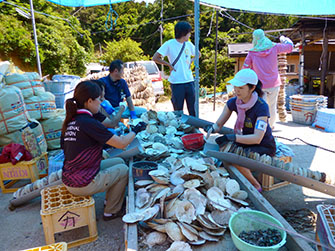
List of past host organizations
Read voices of participants
Program Hosted by ICU
Japan Service-Learning (JSL) Program

Students from overseas partner institutions, supported by ICU students, engage in services at elementary/junior high schools and other facilities around Mitaka City and various on-campus activities together. Sudents from various cultural backgrounds and ICU students mutually provide opportunities to reflect on the service activities and Japanese society from different points of view.
International Service-Learning
Building on ICU's founding commitment to internationalism, the International Service-Learning program provides students with opportunities to engage in service activities across global communities. In addition to long-standing reciprocal exchange programs with partner universities in Asia, the program has recently expanded to include collaborations in Africa, enabling students to interact with a wider range of cultures and societies.
Under the guidance and coordination of local universities, students participate in initiatives addressing key social issues, including education, welfare, and sustainable development. Through these hands-on experiences, they deepen their understanding of global challenges and cultivate practical skills in cross-cultural and community-based learning.
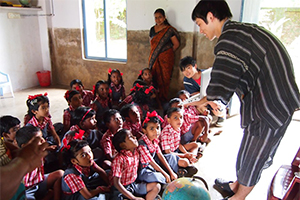
List of international partner institutions (As of AY 2026)
| Area | Country | University |
|---|---|---|
| Asia | Philippines | Silliman University |
| India | Lady Doak College | |
| Indonesia | Petra Christian University | |
| Africa | South Africa | University of Cape Town |
Read more for information on Partner Universities
Read voices of participants
Faculty-Led Service-Learning
This program provides a unique opportunity for students to address social issues while deepening their academic expertise. Each faculty member designs service activities related to their field of specialization, and students participate in these activities for two to four weeks, either in Japan or abroad, under the guidance of the faculty. Before the activities begin, students attend preparatory sessions. During and after the activities, they engage in reflective discussions with faculty to integrate academic knowledge with real-world experience.
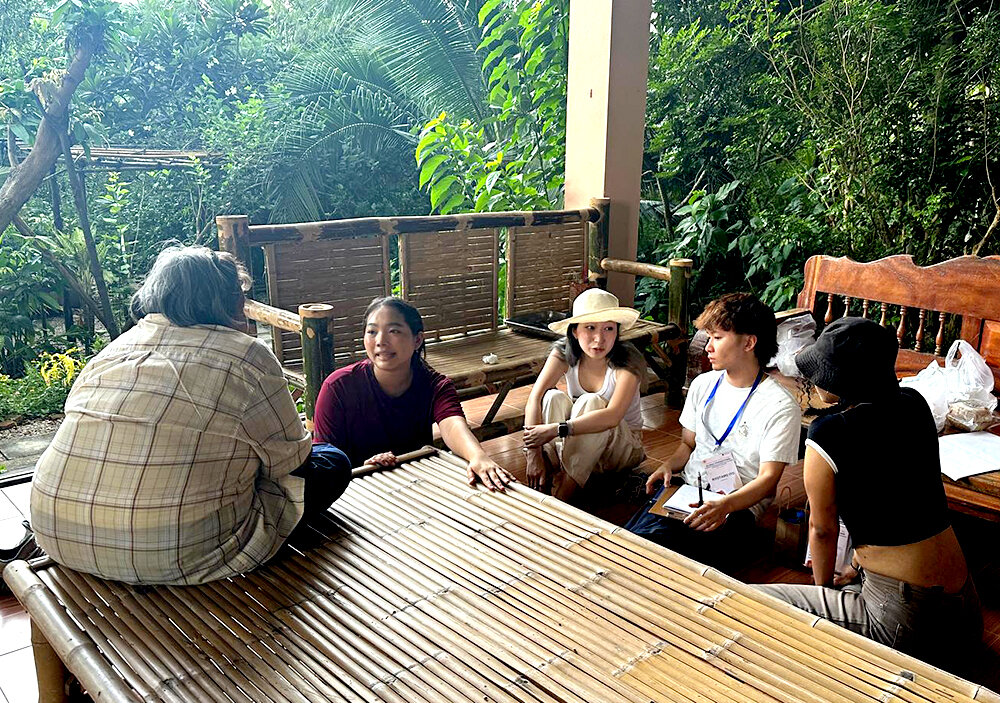
ICU Service-Learning Center
Established in October 2002, the program has fostered student exchange through service activities since 2003 with universities across Asia and, since 2022, with institutions in Africa. The program coordinates student involvement in various service activities throughout Japan.
To ensure students can engage in service activities with confidence, the program provides ongoing support, including information sessions, orientations, and academic advising, as well as coordination with partner institutions, assistance with travel preparations, site visits, and safety measures.
In addition, the program publishes a monograph series that incorporates both domestic and international academic perspectives, contributing to the evolving pedagogy and empirical research in service-learning. It continues to enhance its infrastructure to enable more students and faculty to learn about service-learning, while expanding partnerships beyond Asia and developing new service sites within Japan.


